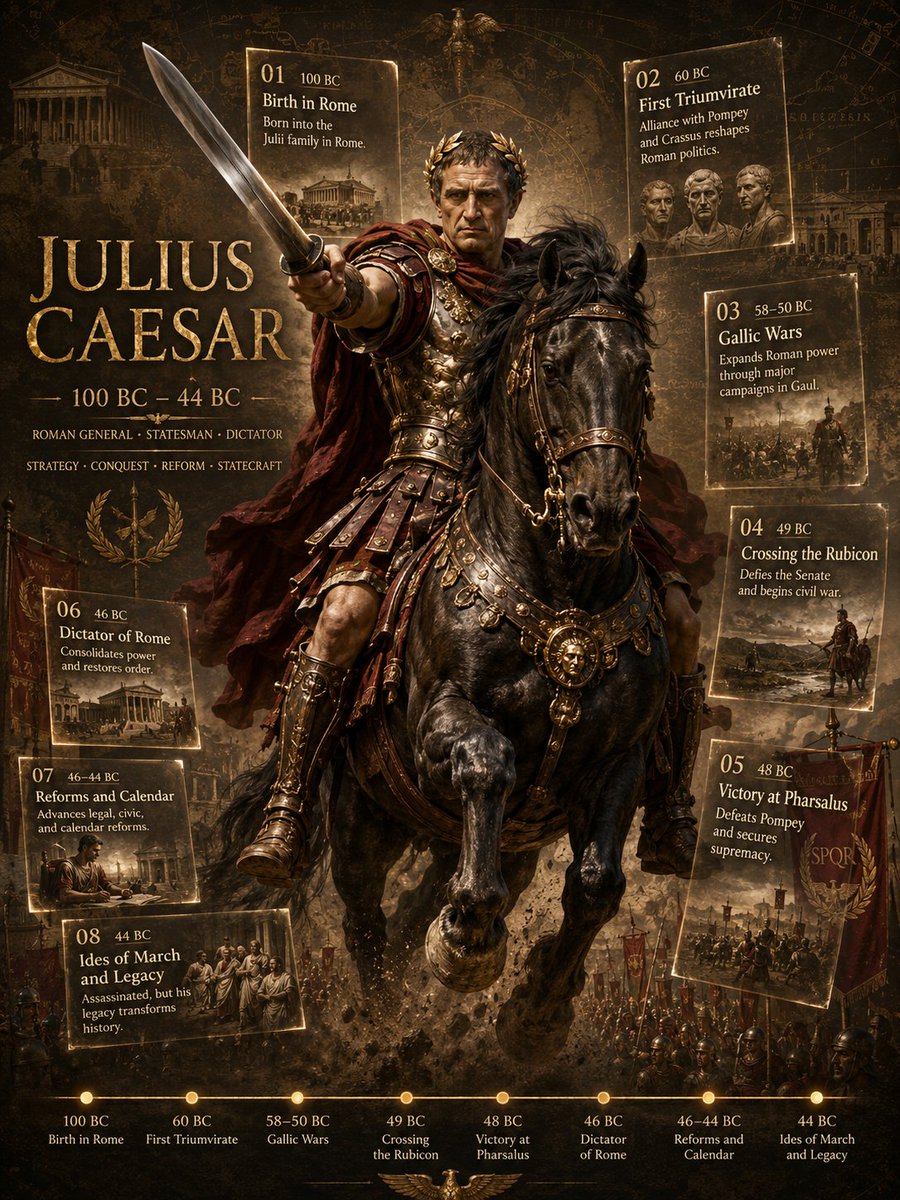
Julius Caesar Epic Timeline Poster
GPT Image 2 promptsGPT Image 2 prompt examplesGPT image promptsAI prompt examplesAI image prompt examplesOpenAI image generation promptsChatGPT image promptsprompt library
Full GPT Image 2 Prompt
Goal: Create a dramatic cinematic historical biography poster for {argument name="subject figure" default="Julius Caesar"}, presenting him as a Roman general, statesman, and dictator in an epic ancient-war infographic style.
Canvas: Vertical 3:4 poster, dark sepia and black palette with antique gold typography, parchment textures, faint Roman maps, diagrams, constellations, and architectural sketches in the background. High-contrast lighting, smoky battlefield atmosphere, gritty dust, embers, and ornate metallic highlights.
Main subject: Center composition shows Julius Caesar riding a powerful black warhorse rearing forward. He wears elaborate Roman armor with gold details, leather skirt armor, bronze greaves, red cloak flowing behind him, and a laurel wreath. His right arm thrusts a short Roman sword toward the viewer in strong foreshortening. The horse has ornate gold-trimmed tack, medallions, leather straps, and dramatic glossy highlights. Keep the rider’s face intentionally obscured by a plain soft brown rectangular mask with no facial features. Behind him are Roman soldiers, standards, banners, and battlefield silhouettes.
Primary text: Large antique serif gold title on the left reads “{argument name="headline text" default="JULIUS CAESAR"}”. Under it place “100 BC – 44 BC”, then “ROMAN GENERAL · STATESMAN · DICTATOR”, then “STRATEGY · CONQUEST · REFORM · STATECRAFT”. Add a gold Roman eagle-and-laurel emblem below the text.
Event cards: Include exactly 8 glowing parchment-style historical event cards, numbered 01 through 08, each with a small sepia illustration and gold border. Arrange them around the central rider: two near the top, three down the right side, and three down the left/lower-left side. The 8 cards must read:
01 — “100 BC” — “Birth in Rome” — “Born into the Julii family in Rome.”
02 — “60 BC” — “First Triumvirate” — “Alliance with Pompey and Crassus reshapes Roman politics.”
03 — “58–50 BC” — “Gallic Wars” — “Expands Roman power through major campaigns in Gaul.”
04 — “49 BC” — “Crossing the Rubicon” — “Defies the Senate and begins civil war.”
05 — “48 BC” — “Victory at Pharsalus” — “Defeats Pompey and secures supremacy.”
06 — “46 BC” — “Dictator of Rome” — “Consolidates power and restores order.”
07 — “46–44 BC” — “Reforms and Calendar” — “Advances legal, civic, and calendar reforms.”
08 — “44 BC” — “Ides of March and Legacy” — “Assassinated, but his legacy transforms history.”
Bottom timeline: Add exactly 8 gold dots connected by a thin horizontal gold line along the bottom edge. Label them, from left to right: “100 BC Birth in Rome”, “60 BC First Triumvirate”, “58–50 BC Gallic Wars”, “49 BC Crossing the Rubicon”, “48 BC Victory at Pharsalus”, “46 BC Dictator of Rome”, “46–44 BC Reforms and Calendar”, “44 BC Ides of March and Legacy”.
Visual style: Hyper-detailed digital painting, epic historical fantasy realism, museum-quality military portrait, ornate Roman imperial design, dramatic chiaroscuro, gilded serif typography, aged manuscript overlays, cinematic poster lighting, sharp central figure, slightly hazy background. Use {argument name="accent color" default="antique gold"} for borders, text, timeline, and decorative symbols.
Constraints: Keep all text legible and correctly spelled. Use exactly 8 event cards and exactly 8 timeline points. Do not add modern objects, logos, watermarks, or extra people in the foreground beyond the mounted commander and background army. Maintain a dark ancient Roman atmosphere with no bright modern colors.